Helping you be your best in the saddle and out
You love horses and riding, but the mental side of the sport is holding you back. Maybe you ride beautifully at home only to lose it at shows, or fear has crept in after a fall and won't let go. Perhaps the pressure to be perfect has stolen all the joy from it. And the challenges you face might not be just in the arena - anxiety, body image, and other struggles are affecting every part of your life.
That's why I created a practice specifically for equestrians. I combine over 15 years of clinical experience with a personal understanding of horse sport to help riders work through whatever is holding them back, both in the saddle and out.
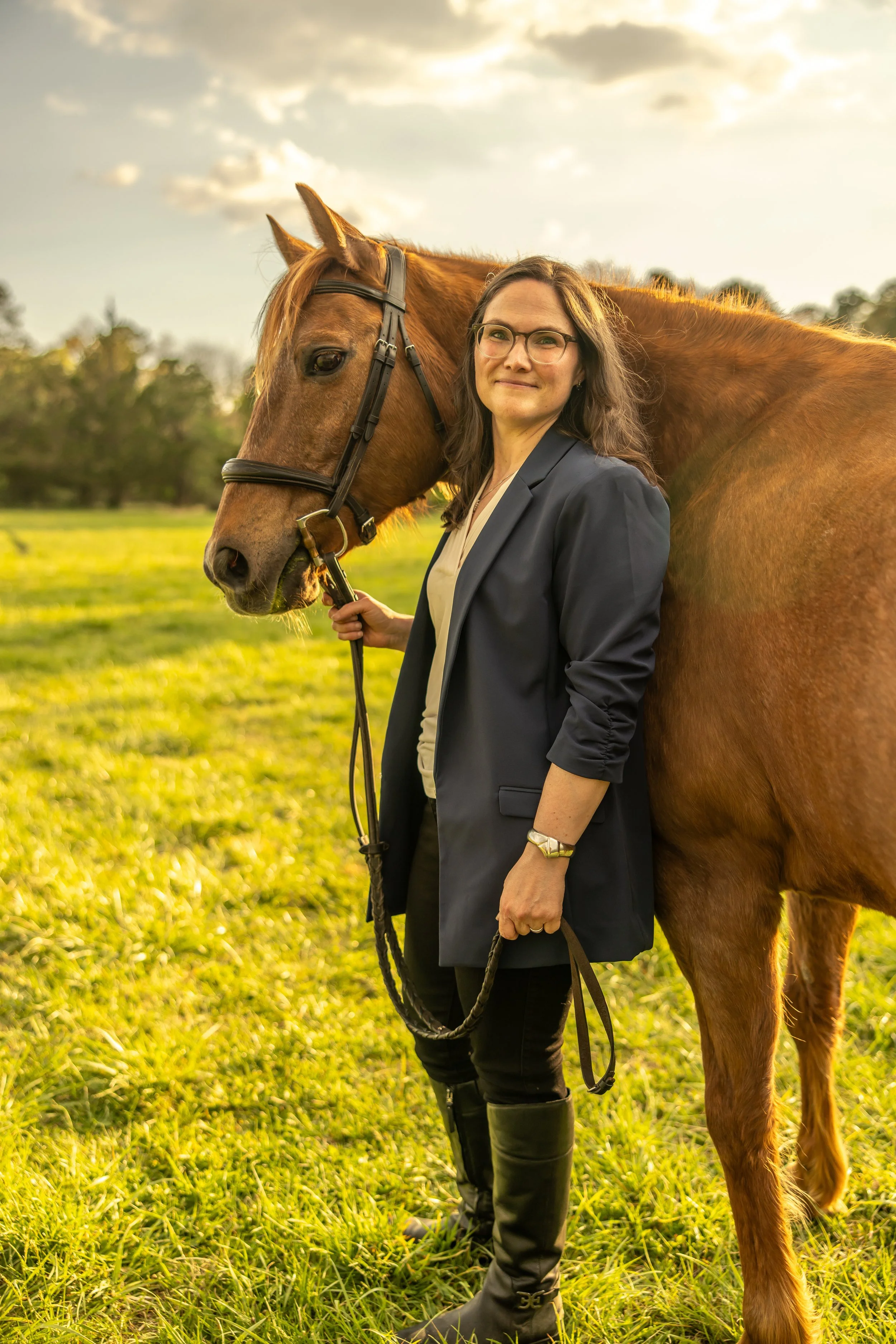
Courtney L. Henry, Ph.D.
Licensed Psychologist
My background
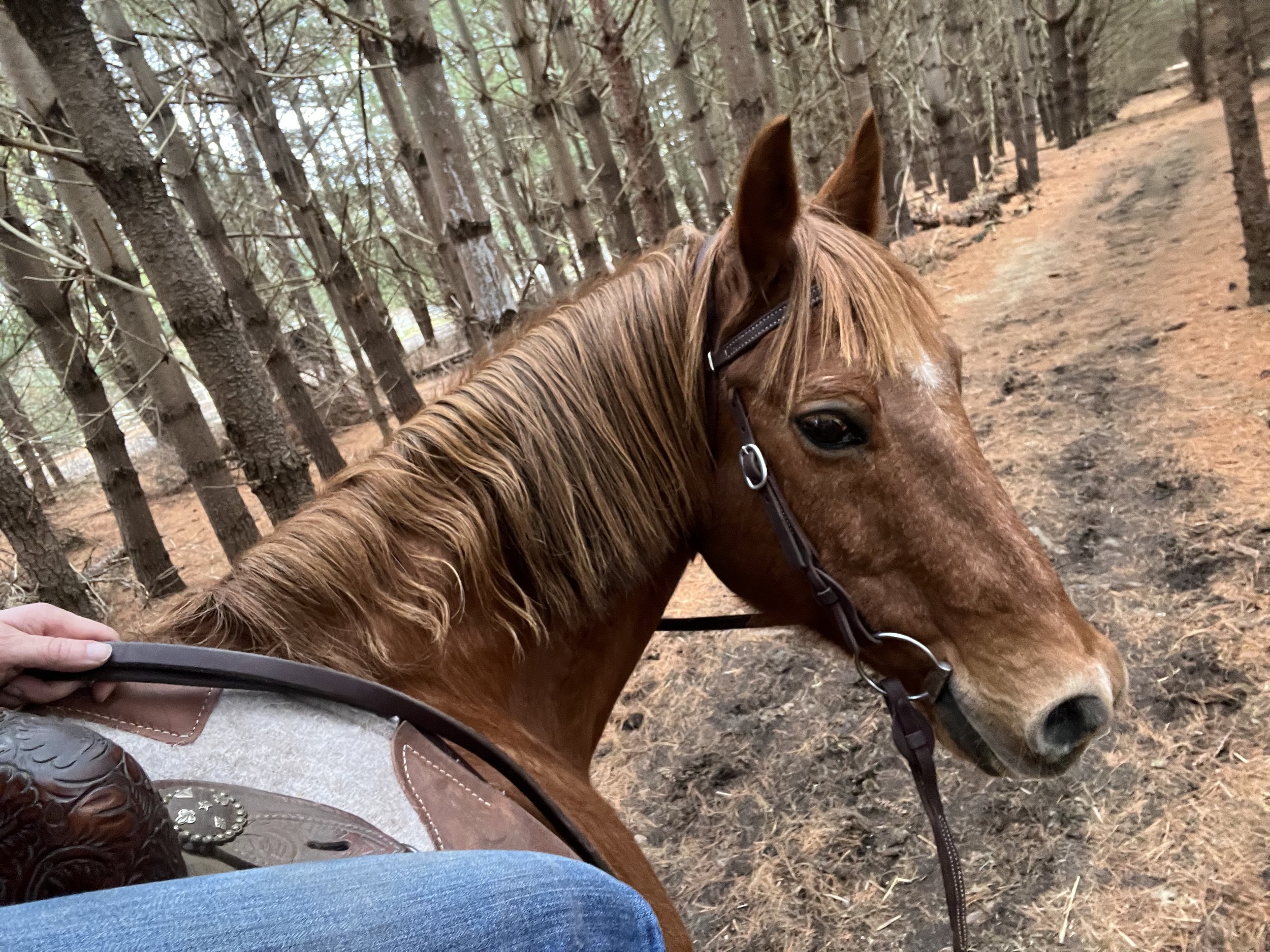
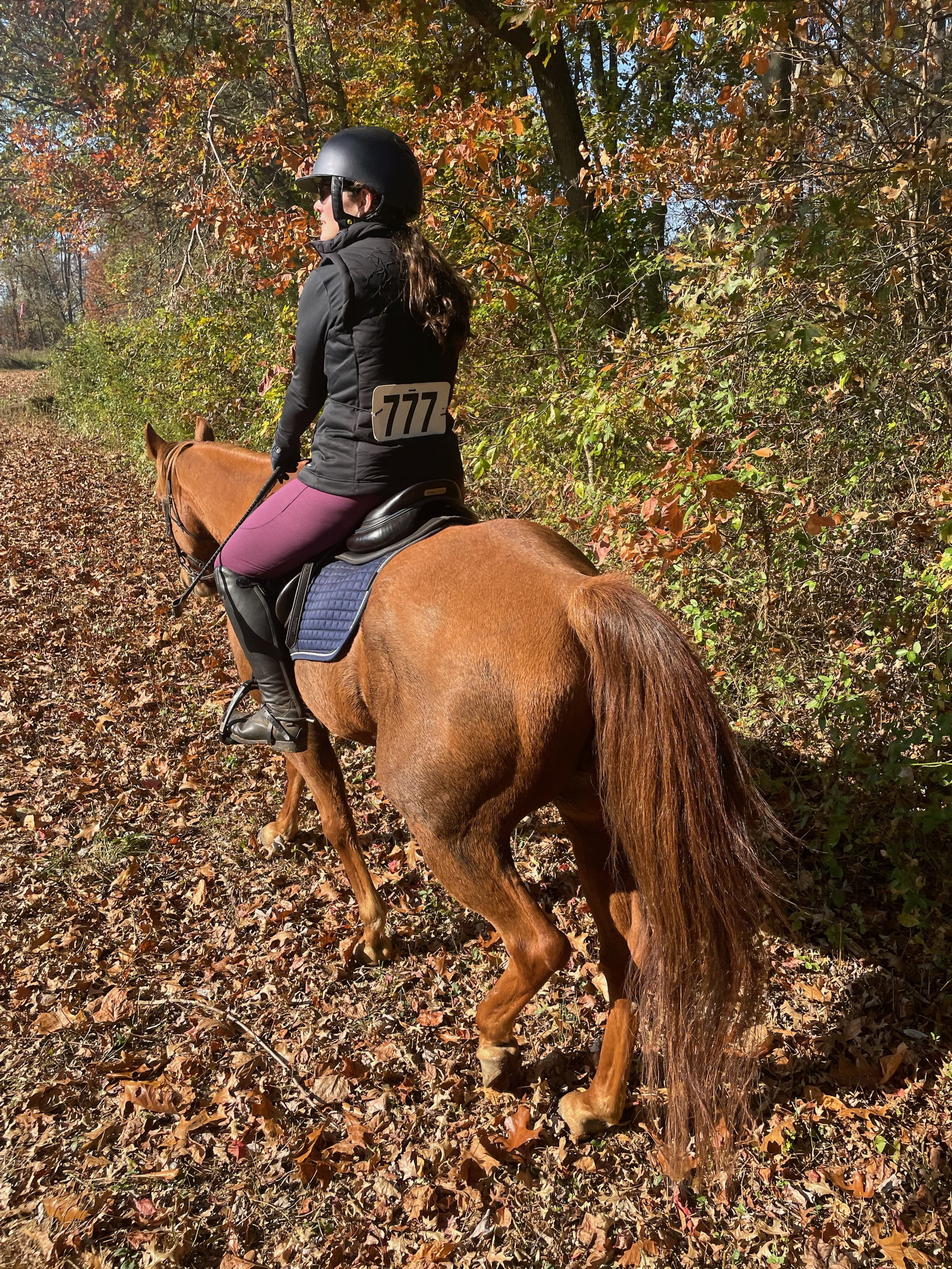
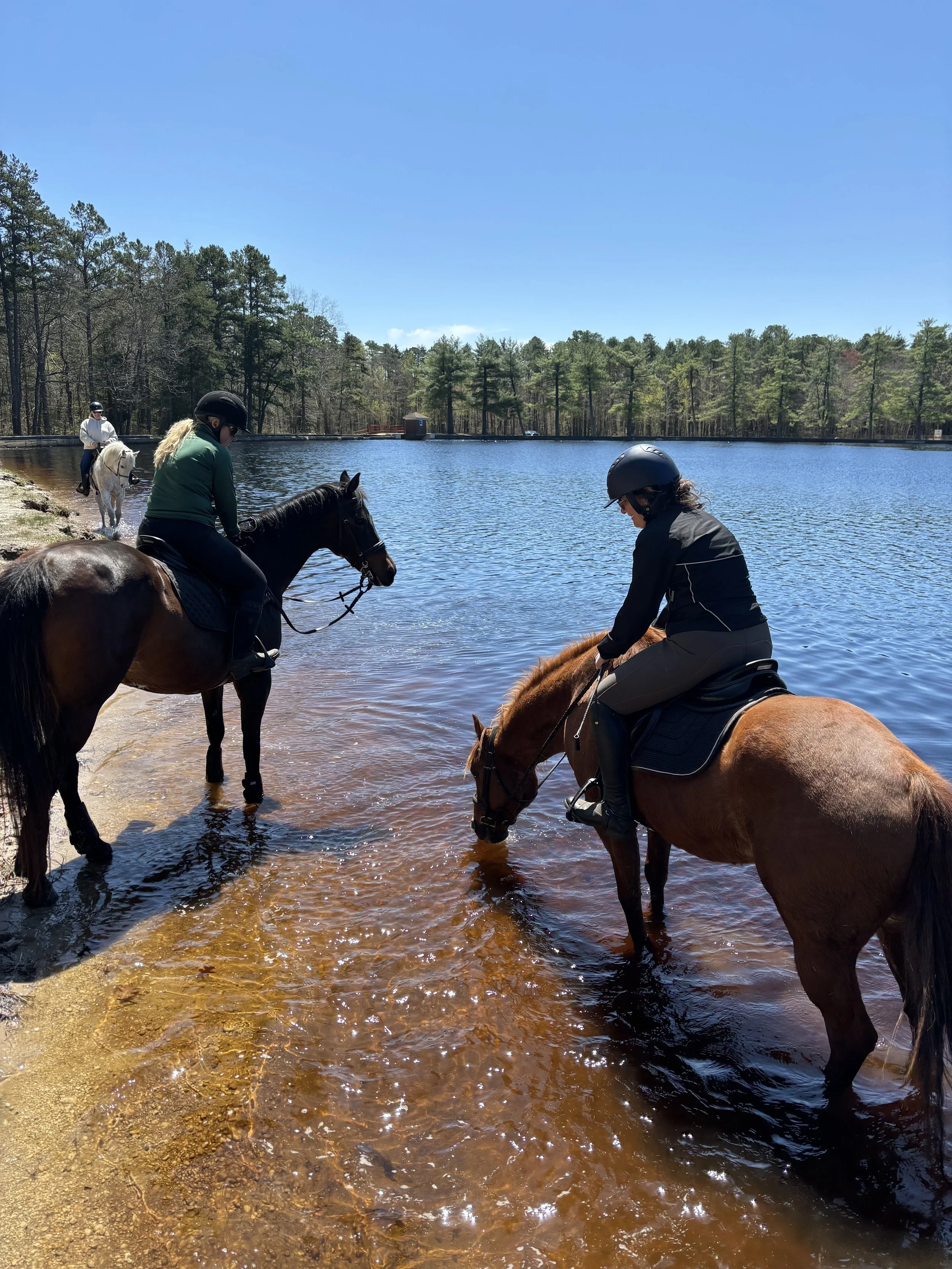
I started riding at age 7, after announcing to my mother that I wanted to quit dance class and take horseback riding lessons instead. Fortunately, she obliged and I’ve been involved with horses on and off ever since. I rode at a local barn before eventually leasing a horse as a teenager and then riding with my IHSA team in college. I trained in hunter/jumpers and dressage, and I’ve recently added in cow sorting. I own a wonderful quarter horse who loves doing anything sporty - jumper shows, hunter paces, chasing cows, etc. Horses offer an opportunity for mindfulness in my life, teaching me about commitment, resilience, and the unique mental demands of working with a partner who weighs 1,200 pounds and is afraid of trash cans.
Professionally, I earned my M.S. in Human Development from the University of Rochester and my Ph.D. in Clinical, Counseling, and School Psychology from Utah State University in 2013. I'm licensed in New Jersey (35SI00552300), Pennsylvania (PS017895), and Utah (8779861-2501), and I’m authorized by PSYPACT (10955) to provide services to clients in most states. I’ve published research on the efficacy of mindfulness-based interventions as well as treatment monitoring and outcomes in college students.
My clinical work has included residential eating disorder treatment, outpatient therapy with children and adults, college counseling services, and forensic evaluations. I've also served as a staff psychologist and coordinator of group therapy at Temple University, where I continue to provide clinical supervision for psychology trainees. Throughout my career, I've specialized in treating anxiety disorders, depression, OCD, phobias, eating disorders, and trauma. I am currently pursuing a Certified Mental Performance Coach (CMPC) certification and receiving mentorship from a clinical sport psychologist.
My approach
I believe in using what actually works. My training includes evidence-based therapies like Cognitive Behavioral Therapy (CBT), Acceptance and Commitment Therapy (ACT), Dialectical Behavior Therapy (DBT), and Exposure and Response Prevention (ERP). I'm also certified in Trauma-Focused Cognitive Behavioral Therapy (TF-CBT). While I'm committed to research-backed approaches, I don’t apply them in a cookie-cutter way - everyone is different, and our work together will be tailored to your specific needs.
During my time in private practice, I learned that I love combining clinical work with performance enhancement, and I realized that I could merge my personal passion for horses with my professional expertise. Working with equestrians allows me to help people navigate both the mental health challenges that affect their lives and the performance obstacles that keep them from riding their best. It's the perfect intersection of the things I'm passionate about.
My style is compassionate and caring, but also directive and goal-oriented. I'll meet you where you are, provide a safe space to work through difficult things, and gently push you toward growth when you're ready. I use humor when appropriate, stay flexible in my approach, and will go the extra mile to support your progress. Most importantly, I genuinely care about your outcomes - both as a rider and as a person.
My guiding principles
Collaboration
Although I’m the expert on mental health, you’re the expert on you - your voice matters.
Effectiveness
You deserve real therapy that works, plain and simple.
Curiosity
The antidote to judgment - it’s how I approach you and hope you approach yourself.
Authenticity
You show up as you and know no topic is off limits. I’ll do the same and use gentle but direct honesty.
Modeling
Good therapy provides an example of a healthy relationship and a space to practice new skills.
Growth
I believe that everyone has the inherent ability to learn and change, myself included.